Ocrolus on the road: insights from the Q1 2026 mortgage circuit
TL;DR: Across six mortgage industry events through the beginning of 2026, Ocrolus heard a consistent message from lenders: AI adoption in mortgage is accelerating and the conversation has shifted from experimentation to execution. That urgency is no longer confined to the largest institutions. Smaller and mid-size lenders are also actively evaluating automation, especially in workflows tied to underwriting speed, consistency and loan quality. For lenders assessing next steps, the key decision is increasingly about platform architecture, including whether to invest in purpose-built, vertically integrated AI designed for mortgage workflows.
Mortgage lending entered 2026 under familiar pressure. Margins remain tight, volumes remain uncertain and operational efficiency continues to carry more strategic weight. Against that backdrop, Ocrolus signed nearly 90 mortgage lender customers in the past year and are signing on new lenders at a pace of roughly three per week. But the more important signal came from the field.
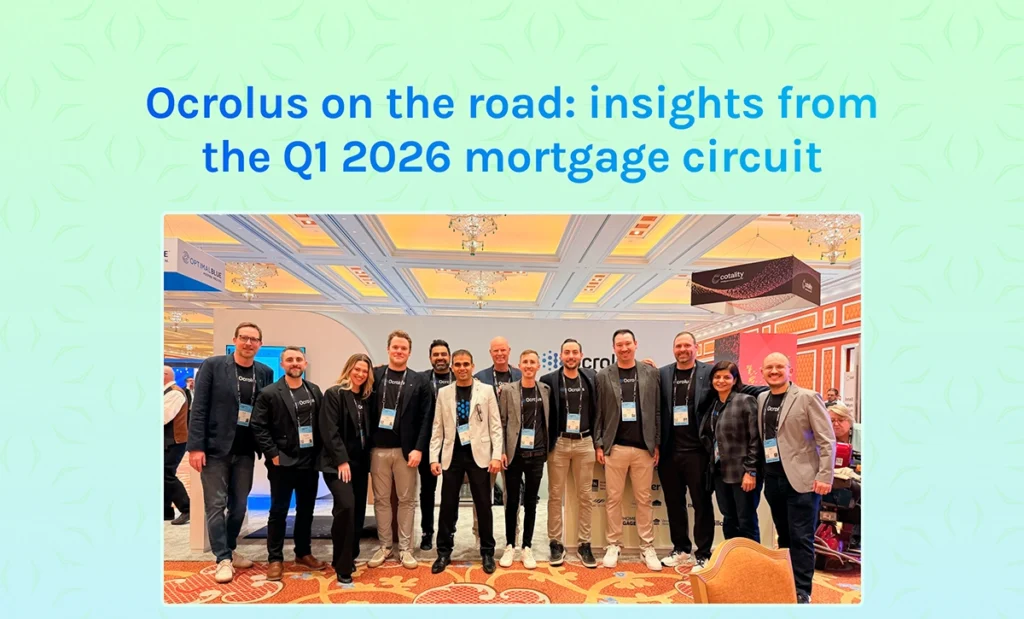
From January through March, the Ocrolus team attended six industry events across six cities. Across executive dinners, partner showcases and large-scale conferences, one pattern emerged with unusual consistency: lenders are moving beyond broad questions about whether AI belongs in mortgage. The discussion is now centered on where to apply it first, how quickly to operationalize it and which platforms can support durable adoption across the loan lifecycle.
That shift matters because mortgage AI decisions are increasingly tied to infrastructure choices, not isolated workflow fixes. Lenders are weighing whether to adopt technology built specifically for mortgage operations or continue assembling disconnected tools across intake, underwriting and conditions management. That distinction came up repeatedly in conversations throughout the quarter, especially among teams looking for more consistency across document analysis, income calculation and borrower data review.
A useful definition also surfaced beneath many of those conversations. AI-native mortgage technology refers to platforms built from the ground up on models trained specifically on financial documents and lending workflows, rather than systems that add AI features onto legacy infrastructure. For lenders comparing options in 2026, that architectural difference is becoming more relevant as automation expands into more decision-adjacent workflows.
The season opened on Jan. 14 with a Lenders One executive dinner in Dallas. The smaller format created space for candid discussion around modernization priorities and technology investment. The signal was direct: operational strain is not easing and lenders are under pressure to improve efficiency without introducing more fragmentation into the process.
In February, Ocrolus attended the MBA’s Independent Mortgage Bankers Conference in Amelia Island, Florida, from Feb. 2 through 4. The conference brought together independent mortgage bankers operating in a market defined by margin compression and changing origination dynamics. Later that month, The Mortgage Collective’s Desert Disruption in Scottsdale, Arizona offered a more hands-on setting. At the Partner Showcase, Ocrolus solutions engineer Stef McNabb led a live demonstration of the mortgage technology suite, showing how the platform handles document analysis, income calculation and audit-ready decisioning across the origination workflow. For mortgage operators, seeing the workflow in action often creates a different level of engagement than hearing high-level AI messaging.

March continued that pattern. Ocrolus attended the LendersOne Summit in Fort Lauderdale, Florida, from March 1 through 3, then traveled to Salt Lake City for the Hurt No More Ski Trip, an annual industry gathering known for relationship-driven dialogue. Across both settings, the conversations returned to the same themes: automation priorities, platform trust and the pace of adoption in mortgage lending.
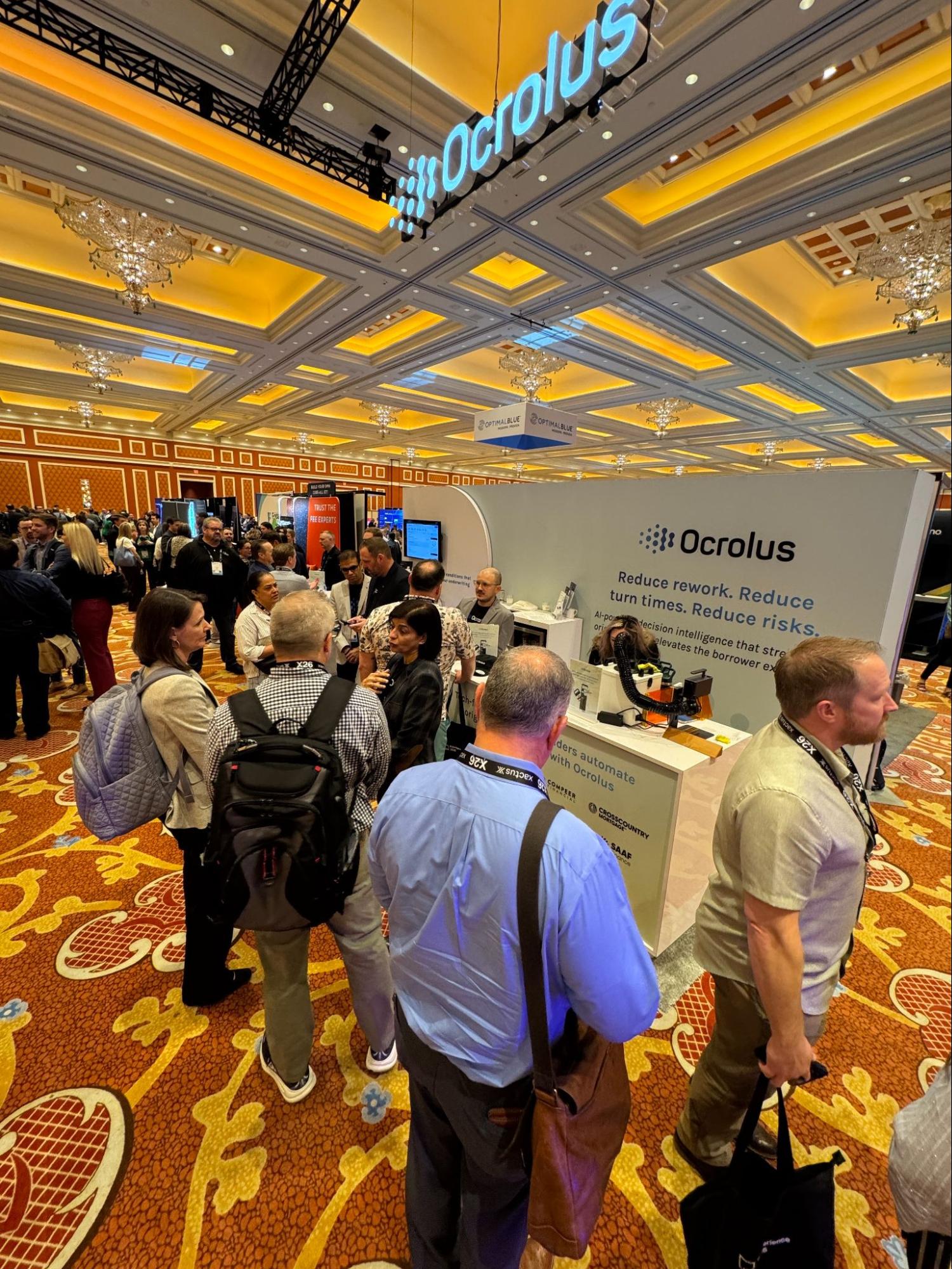
ICE Experience 2026, held March 16 through 18 in Las Vegas, made that momentum more visible. The conference itself drew strong engagement and the Ocrolus presence reflected that energy, including a pickleball tournament on day one, a Guinness bar on St. Patrick’s Day and custom YETI’s being engraved in the booth.
More importantly, ICE served as the stage for a major product milestone. Ocrolus announced the general availability of automated conditioning capabilities, launching April 1. The product enables mortgage lenders to generate, track and resolve underwriting conditions in a single unified workspace, including Encompass sync, document matching and full condition lifecycle management. For lenders, conditioning remains one of the most manual and time-intensive parts of underwriting, making it a natural area for workflow automation.
What stood out most across the circuit was not only the intensity of interest in mortgage AI, but the widening set of institutions involved. Compared with prior years, AI and automation are no longer being evaluated only by the largest lenders. Smaller and mid-size lenders are also actively pursuing adoption. That was visible across multiple event formats and in conversations with teams facing the same pressures around speed, consistency and capacity.
The 2026 mortgage circuit did not produce a single headline trend. It reinforced a broader market transition already underway. Lenders are moving from general curiosity to platform-level decisions about how mortgage AI fits into real operations. For an AI-powered workflow and data analytics platform built specifically for lending, that shift is meaningful because it reflects growing demand for systems that can support underwriting workflows with greater structure, consistency and operational readiness.
Key takeaways
- Across six mortgage industry events in early 2026, lenders consistently framed AI as an execution priority rather than a future consideration.
- Conversations focused on platform decisions, workflow readiness and where automation can drive the most value in mortgage operations.
- Smaller and mid-size lenders are now actively evaluating AI and automation alongside larger institutions.
- At ICE Experience 2026, Ocrolus announced the general availability of automated conditioning capabilities, launching April 1.
- The strongest market signal from the quarter was not just increased interest in AI, but broader adoption conversations across the mortgage ecosystem.
FAQ
What did Ocrolus announce at ICE Experience 2026?
Ocrolus announced the general availability of automated conditioning capabilities, launching April 1. The product enables lenders to generate, track and resolve underwriting conditions in a single unified workspace, including Encompass sync, document matching and full condition lifecycle management.
What is automated conditioning in mortgage underwriting?
Automated conditioning refers to technology that helps lenders generate, track and resolve underwriting conditions within a structured workflow. In the Ocrolus platform, that includes unified workspace functionality, document matching and Encompass sync.
Are smaller mortgage lenders adopting AI?
Based on conversations across the 2026 event circuit, smaller and mid-size lenders are actively evaluating and pursuing AI and automation in ways that were less common a year earlier.
What is AI-native mortgage technology?
AI-native mortgage technology refers to platforms built from the ground up on models trained specifically on financial documents and lending workflows, rather than systems that add AI capabilities onto legacy infrastructure.


