How borrower experience is reshaping mortgage competition in 2026
TL;DR: Borrowers are bringing digital-first expectations into the mortgage process, but many applications still feel repetitive and opaque. As competition intensifies in 2026, lenders can differentiate by reducing document rework, improving transparency and preventing late-stage surprises with modern intake and validation powered by Ocrolus.
Homebuying is hard enough before financing friction enters the picture. In the National Association of Realtors’ 2025 profile of home buyers and sellers, 56% of buyers said the most difficult step was finding the right property. When borrowers finally receive an accepted offer, they expect momentum. Too often, the mortgage application slows that momentum with repeated requests, unclear status and last-minute conditions.
In 2026, borrower experience is not a “front-end” nice-to-have. It is a competitive lever that influences pull-through, referrals and brand trust.
The moments that frustrate borrowers most
Ask almost any lender where borrower frustration starts and the answer is rarely pricing or underwriting standards. It is the experience of navigating the mortgage application process itself.
One borrower sentiment is especially telling. In a Guaranteed Rate survey cited by housing columnist Lew Sichelman, some borrowers said they would rather have a root canal than go through the mortgage process again. The comparison may be extreme, but it captures how draining the process can feel when it stretches on without clarity.
That frustration also manifests in more familiar ways. The mortgage application is often compared to other universally disliked tasks, which are shorthand for an experience that feels slow, repetitive and opaque. Borrowers commonly liken it to:
- Waiting at the DMV
- Filing taxes by hand
- Assembling furniture with missing instructions
- Sitting in rush hour traffic
The humor lands because it reflects a real operational problem. When borrowers face repeated document requests, limited visibility into status and late-stage surprises, confidence erodes quickly. That lost time shows up as hesitation, stalled decisions and, ultimately, lost deals.
What makes mortgage applications feel so painful
Borrower frustration is not anecdotal. Industry and regulatory feedback consistently show that negative borrower perceptions tend to emerge when the mortgage process feels unclear, repetitive or unpredictable, particularly as loans approach closing.
The most common friction points are familiar to nearly every lending operation:
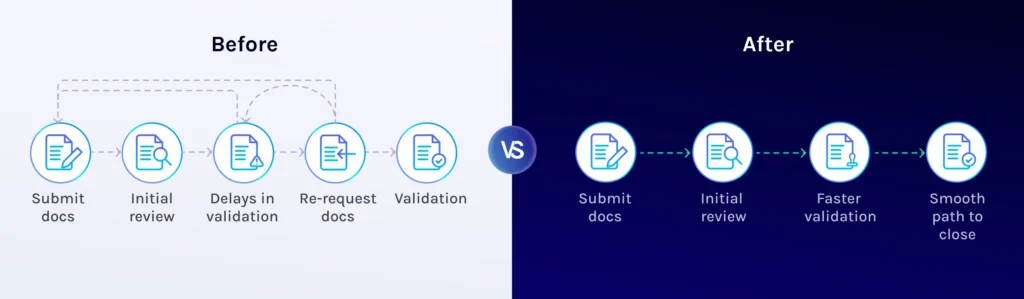
- Repeat document requests caused by mis-indexed, unreadable or incomplete files
- Limited visibility into application status or what is still blocking underwriting
- Rekeying and data mismatches across systems that create avoidable rework
- Inconsistent completeness standards that shift late in the process
- Last-minute conditions that surface when timelines are already tight
These breakdowns are not just operational inefficiencies. They directly affect borrower confidence. When transparency is low and requests feel reactive, trust erodes. That erosion shows up as hesitation, stalled decisions and, in competitive markets, lost borrowers.

Borrower experience is now a competitive issue, not a marketing issue
Borrowers are accustomed to real-time updates and clear next steps in nearly every major financial interaction. Mortgage, by contrast, still too often operates like a black box, even when lenders invest in modern borrower portals. The disconnect is structural. Experience is shaped by what happens beneath the portal. When intake and validation are inconsistent, borrowers experience that as repeated outreach, unclear status and shifting requirements.
This gap between expectation and reality has drawn increased attention from regulators and industry bodies focused on consumer transparency and the design of fair processes. Borrower experience is no longer viewed as subjective or anecdotal. It is increasingly tied to how clearly lenders communicate requirements, how predictably loans move through the lifecycle and how well systems prevent last-minute surprises.
In other words, borrower experience is no longer just a retention or referral topic. It is a trust and transparency issue, shaped by operational discipline as much as borrower-facing design.
How lenders can modernize borrower experience without loosening control
Modernizing borrower experience does not mean lowering standards. It means tightening the workflow so the file advances with fewer touches and fewer surprises.
Ocrolus supports this shift as an AI-powered workflow and data analytics platform that transforms messy documents and digital data into regulatory-grade decision intelligence. For mortgage teams, the practical value is evident in three key areas:
- Modernize intake so “received” actually means usable
Automate document classification and data capture so the right information lands in the right place the first time. Fewer misindexed documents result in fewer repeat requests and faster underwriting starts. - Validate earlier so issues do not become last-mile fire drills
Move discrepancy detection forward in the process so conditions are identified when there is time to resolve them. This reduces closing-stage churn and improves borrower confidence. - Standardize analytics so teams can explain decisions consistently
When income calculations and supporting data are transparent and audit-ready, teams spend less time reconciling mismatches and more time moving files to clear-to-close.
A practical way to measure progress is to track document touches per file, condition volume per loan and time spent resolving data mismatches. If those numbers fall, borrower experience improves as a direct result.
To see how this approach applies across the mortgage lifecycle, explore how Ocrolus’ mortgage tech solutions can impact your business today. For broader guidance on scaling AI in lending operations, visit the Ocrolus AI resource center.
The bottom line for 2026
Borrowers will not remember every rate quote or underwriting nuance, but they will remember whether the process felt clear, predictable and respectful of their time. Lenders that reduce friction in intake and validation will win more often, not because they market better, but because they execute better.
Key takeaways
- Borrower experience has become a competitive lever in mortgage lending as digital-first expectations continue to rise heading into 2026.
- The most common sources of borrower frustration stem from operational breakdowns, including repeat document requests, limited status visibility and late-stage conditions.
- Poor intake and inconsistent validation directly erode borrower confidence, leading to stalled decisions and lost deals.
- Improving borrower experience does not require loosening underwriting standards. It requires earlier validation, cleaner intake and more consistent analytics.
- Ocrolus helps mortgage lenders reduce rework and surprises by transforming messy documents into trusted, regulatory-grade decision intelligence.


