When the fake looks real: How AI is changing the document fraud threat in tenant screening
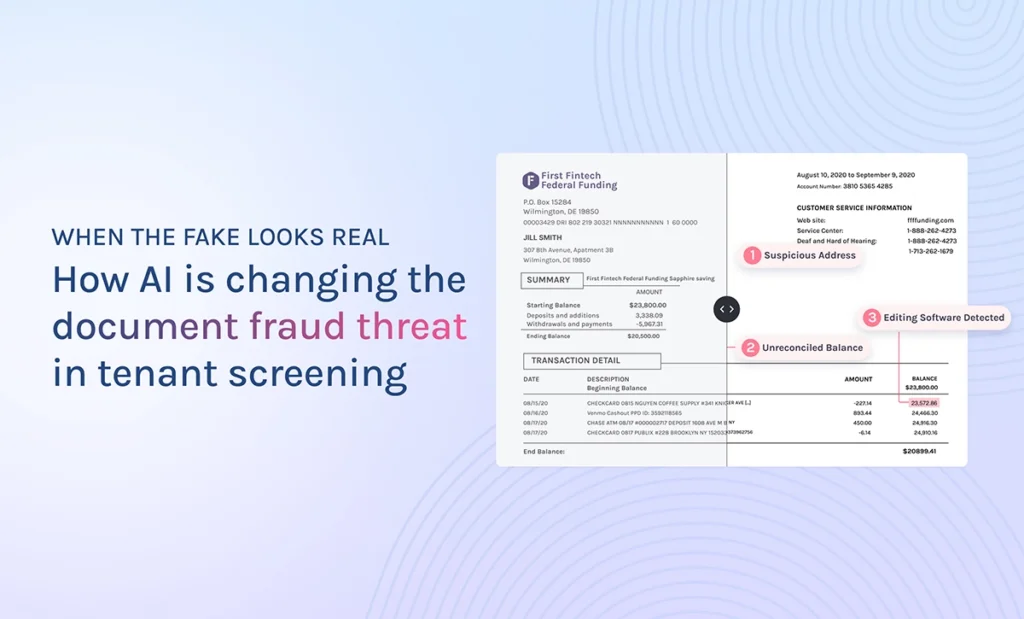
TL;DR: Tenant screening fraud has entered a new era. Generative AI tools now enable applicants to produce convincing fake pay stubs, bank statements and tax documents that bypass traditional detection methods. For risk and fraud leaders at screening platforms and property managers, the core challenge is no longer spotting obvious forgeries. It is about building workflows that can distinguish authentic documents from sophisticated synthetic ones at scale, without slowing down leasing decisions or overwhelming review teams with false positives.
Rental fraud has always existed. Falsified pay stubs, inflated bank balances, doctored employer letters. These are not new problems for property managers and tenant screening platforms. What is new is how convincing the fakes have become, and how quickly the threat has escalated.
Generative AI has fundamentally changed the economics of document fraud. Tools that once required technical skill to produce a convincing forgery are now accessible to virtually anyone. An applicant can generate a realistic-looking pay stub, a fabricated bank statement or a synthetic tax document in minutes, and the output is often indistinguishable from a legitimate file to the naked eye. For screening teams relying on visual review or legacy rule-based detection, this is a serious and growing exposure.
The tenant screening industry sits at a particularly acute intersection of this problem. Unlike mortgage or commercial lending, screening workflows operate at high volume and high speed. Leasing decisions are expected quickly. Review teams are lean. And the documents in question, pay stubs, bank statements and offer letters, are exactly the document types that AI generation tools are most capable of replicating.
Why traditional detection is no longer sufficient
Most document fraud detection in tenant screening was designed for a different era of fraud. Rule-based systems look for known patterns: inconsistent fonts, unusual formatting and metadata anomalies. Human reviewers are trained to spot red flags based on what forged documents used to look like.
Neither approach keeps pace with AI-assisted manipulation. Generative tools produce documents with consistent formatting, plausible metadata and realistic field values. The structural signals that reviewers and legacy systems rely on are either absent or deliberately mimicked. A document that passes a basic authenticity check today may have been fabricated with a tool that was updated last week.
There is also a pattern problem that extends beyond individual documents. Coordinated fraud, where the same tampered template or fabricated employer is reused across multiple applications, is increasingly common. Screening platforms processing applications at scale can encounter the same fraudulent asset dozens of times before any single instance triggers a manual flag. Without cross-application pattern detection, each submission is evaluated in isolation and the broader signal goes undetected.
The result is a painful operational tradeoff that most screening teams know well: either increase manual review to catch more fraud, slowing decisions and straining operations, or accept the risk of approvals on fraudulent applications. Neither option is sustainable as fraud volumes grow and AI-generated documents become more sophisticated.
Where AI fits in the solution
The same technological shift enabling more sophisticated fraud is also enabling more sophisticated detection. Vertical AI-powered document forensics have advanced significantly, and the most capable approaches now operate at the file level rather than the content level alone.
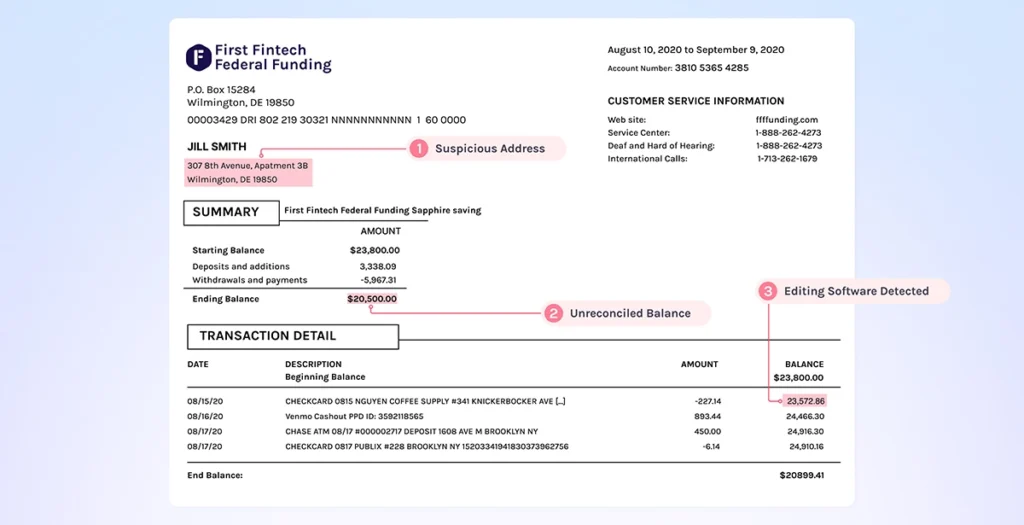
File-level forensic analysis examines the underlying structure of a document, including pixel patterns, layer composition, metadata consistency and print-to-PDF artifacts, rather than just the information it contains. This matters because AI-generated documents often leave structural traces that are invisible to a human reviewer but detectable at the file level. A document that looks legitimate on screen may contain manipulation artifacts in its underlying file structure that a forensic layer can surface.
Content-level analysis still plays an important role. Cross-field consistency checks, such as whether the income figure on a pay stub aligns with the employer, pay period and tax withholding, remain valuable signals, particularly for catching manual edits and logical inconsistencies. The most robust approaches layer content checks and file forensics together, since each catches fraud patterns the other may miss. Historic research on file tampering in lending consistently shows that applications containing manipulated documents perform significantly worse at payback, a signal equally relevant for leasing decisions.
Serial fraud detection adds a third dimension. When document integrity checks are applied across an applicant pool rather than in isolation, patterns that would be invisible at the individual application level become visible. A tampered template reused across twenty applications or a fabricated employer appearing in multiple submissions from different applicants are signals that require cross-application visibility to detect, and they are among the most valuable indicators of organized fraud.
Platforms building on AI-powered workflow infrastructure, including Ocrolus, combine these layers, content analytics, deep file forensics and serial fraud detection, into workflow-ready outputs that screening teams can operationalize without overhauling their existing review processes. The goal is not to replace human judgment but to direct it: routing low-risk files faster and surfacing high-risk files with the evidence reviewers need to act decisively.
The audit and compliance dimension
Document fraud in tenant screening is not only an operational problem. It creates regulatory and compliance exposure that risk leaders are increasingly focused on.
Fair housing compliance requires that screening decisions be consistent and defensible. When a fraudulent application is approved and leads to a costly tenancy, or when a legitimate application is declined based on a misread document, the downstream consequences can extend well beyond the immediate transaction. Audit-ready evidence, including structured reason codes that explain why a document was flagged and are traceable to specific forensic signals, is increasingly important for platforms that need to demonstrate consistent, policy-aligned decision-making.
This is one of the areas where AI-powered forensics delivers value beyond fraud prevention alone. When every document integrity decision is backed by structured evidence, screening teams have a defensible record of how decisions were made. That record matters in disputes, in audits and in regulatory examinations.
What this means for screening teams now
The practical implication for risk and fraud leaders is not that manual review needs to disappear, or that every platform needs to rebuild its fraud stack immediately. It is that the document fraud threat has structurally changed, and the detection approaches designed for the previous era are not built to meet it.
Teams still relying primarily on visual review or basic metadata checks to catch fraudulent income documents are operating with a gap that will widen as AI generation tools continue to improve. The question is not whether to modernize document integrity capabilities, but how to do it in a way that fits existing workflows, maintains decision speed and provides the evidence needed to support compliant, defensible outcomes.
AI-powered forensics, applied at the file level, layered with content checks and extended across application patterns, represents the most credible path to closing that gap without sacrificing the operational efficiency that modern tenant screening demands.
Key takeaways
- Generative AI has dramatically lowered the barrier to producing convincing fraudulent documents, making traditional visual review and rule-based detection insufficient for modern tenant screening workflows.
- File-level forensic analysis detects manipulation artifacts invisible to human reviewers, offering a detection layer that content checks alone cannot provide.
- Serial fraud detection, identifying reused templates and fabricated employers across multiple applications, requires cross-application visibility that most legacy systems lack.
- Audit-ready evidence tied to document integrity decisions is increasingly important for fair housing compliance and defensible screening outcomes.
- The path forward is layering content checks, file forensics and pattern detection into workflow-ready outputs that direct human review rather than replace it.
FAQ
What is document fraud in tenant screening?
Document fraud in tenant screening refers to the submission of falsified or manipulated financial documents including pay stubs, bank statements, offer letters and tax records, to misrepresent an applicant’s income, employment or financial stability during the rental application process.
How has AI changed document fraud in tenant screening?
Generative AI tools now enable applicants to produce realistic fake documents with consistent formatting, plausible metadata and accurate-looking field values in minutes. This makes traditional detection methods, including visual review and rule-based systems, significantly less effective at identifying fraudulent submissions.
What is file-level forensic analysis and why does it matter?
File-level forensic analysis examines the underlying structure of a document, including pixel patterns, layer composition, metadata and edit traces, rather than just its visible content. AI-generated documents often leave structural artifacts that are invisible on screen but detectable through forensic analysis, making this a critical detection layer for modern document fraud.
What is serial fraud in tenant screening?
Serial fraud occurs when the same tampered document template, fabricated employer or fraudulent asset is reused across multiple rental applications. Detecting it requires cross-application pattern analysis, since individual document checks evaluate each submission in isolation and miss the broader signal.
Why is audit-ready evidence important for screening decisions?
Fair housing regulations require that screening decisions be consistent and defensible. Structured evidence tied to document integrity outcomes, including forensic reason codes explaining why a document was flagged, creates a traceable record that supports compliance in audits, disputes and regulatory examinations.
Does AI-powered document forensics replace human review?
No. The goal is to direct human review more effectively, routing low-risk documents faster and surfacing high-risk documents with the evidence reviewers need to act decisively, rather than removing human judgment from the process.


