Powering small business funding with precise analytics

Small business funders face a critical challenge: making fast, confident decisions hinges on quickly gaining a clear picture of applicants’ financial health. By integrating robust analytics into their workflows, funders transform raw financial data into actionable insights that drive better portfolio performance. Precise analytics powered by AI give SMB funders the clarity needed to assess risk, identify opportunities and position themselves for success in a competitive lending vertical.
Why precision matters in small business lending
Surface-level metrics rarely tell the whole story. Funders need to understand cash balance trends, recurring transactions, seasonal patterns and non-sufficient funds activity to gauge resilience. AI‑powered document automation eliminates the need for manual data entry and standardizes inputs from various sources, reducing the risk of human error and ensuring consistent decision-making.
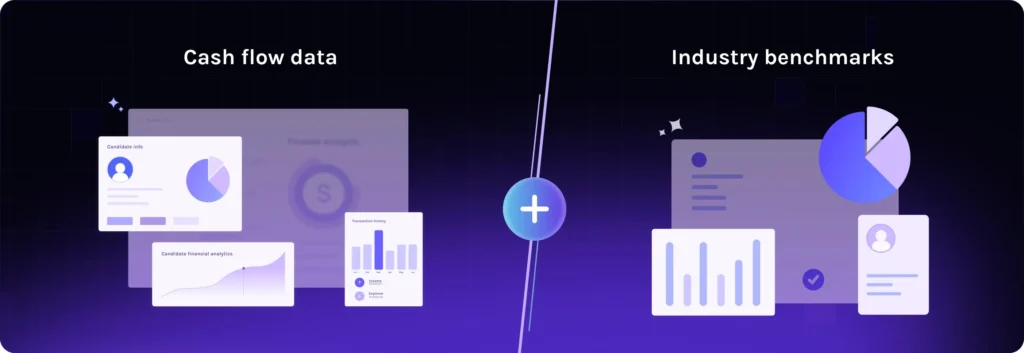
Detailed cash flow data allows funders to detect patterns in bank statements that influence repayment ability and risk exposure. This data is especially useful when evaluating non-traditional borrowers who transact via Venmo, CashApp or other emerging banking platforms. Modern cash‑flow analytics for funders provide the depth of insight needed to make these nuanced assessments.
Benchmarking against peers for a competitive edge
Another important consideration in determining creditworthiness is the borrower’s industry. For example, while a pharmacy and a florist may both be financially healthy businesses, their bank statements likely vary greatly.
Small business funders can use aggregated analytics to compare their borrower performance metrics, loan quality and default rates against industry norms. This type of benchmarking is particularly valuable for funders that process high volumes of applications.
Access to standardized, comprehensive data across the lending cycle creates a “common language” for internal teams and industry comparisons. Automated document classification systems ensure that financial documents from diverse sources are consistently categorized and analyzed.
Internal benchmarking analytics also enable funders to identify gaps in their own underwriting performance, set realistic growth targets and optimize portfolio mix for profitability. Check out how altbanq transformed its underwriting process, delivering faster credit decisions, improving fraud detection and significantly increasing productivity.

Funders who track performance against peers can better position themselves to capture market share during competitive shifts, especially when rates or borrower demand change. Advanced fraud detection for lending capabilities also helps maintain portfolio quality during periods of rapid growth.
How deep insights lead to action
Analytics are most valuable when integrated into a funder’s decision-making workflows, helping teams move from observation to execution without unnecessary delays.
Granular financial data such as revenue/expense patterns and borrower cash flow ratios can directly inform credit terms, risk models and targeted borrower support programs. Income verification automation plays a crucial role in validating these financial patterns quickly and accurately.
By removing manual review bottlenecks, funders free up underwriters to focus on credit decisioning and relationship-building rather than time-consuming administrative tasks and error-prone manual processes. Ocrolus’ AI resource center offers valuable educational materials for those looking to enhance their skills in this evolving landscape of AI in financial services.
Even beyond funding, actionable analytics help identify portfolio trends early, allowing funders to proactively address potential delinquencies, adjust risk strategies or seize emerging opportunities. Various lending technology whitepapers explore these analytical approaches and provide detailed insights.
Book a demo to learn more about how forward-thinking small business funders are leveraging analytics from Ocrolus for more efficient, informed decision-making.
Key takeaways
- With precise, automated insights, funders can confidently make credit decisions that balance portfolio growth with prudent risk management.
- Analytics are most valuable when integrated into a funder’s decision-making workflows, helping teams move from observation to execution without unnecessary delays.
- Benchmarking analytics enable SMB funders to understand businesses’ financial health based on valuable data and context from their own unique industries.
- AI-powered cash flow analysis provides deeper visibility into borrower financial health than traditional credit metrics alone.
- Small business credit decisioning improves when funders can access standardized data across their entire portfolio.


